Concrete vs. Paver Driveways: Which Needs Cleaning More Often?
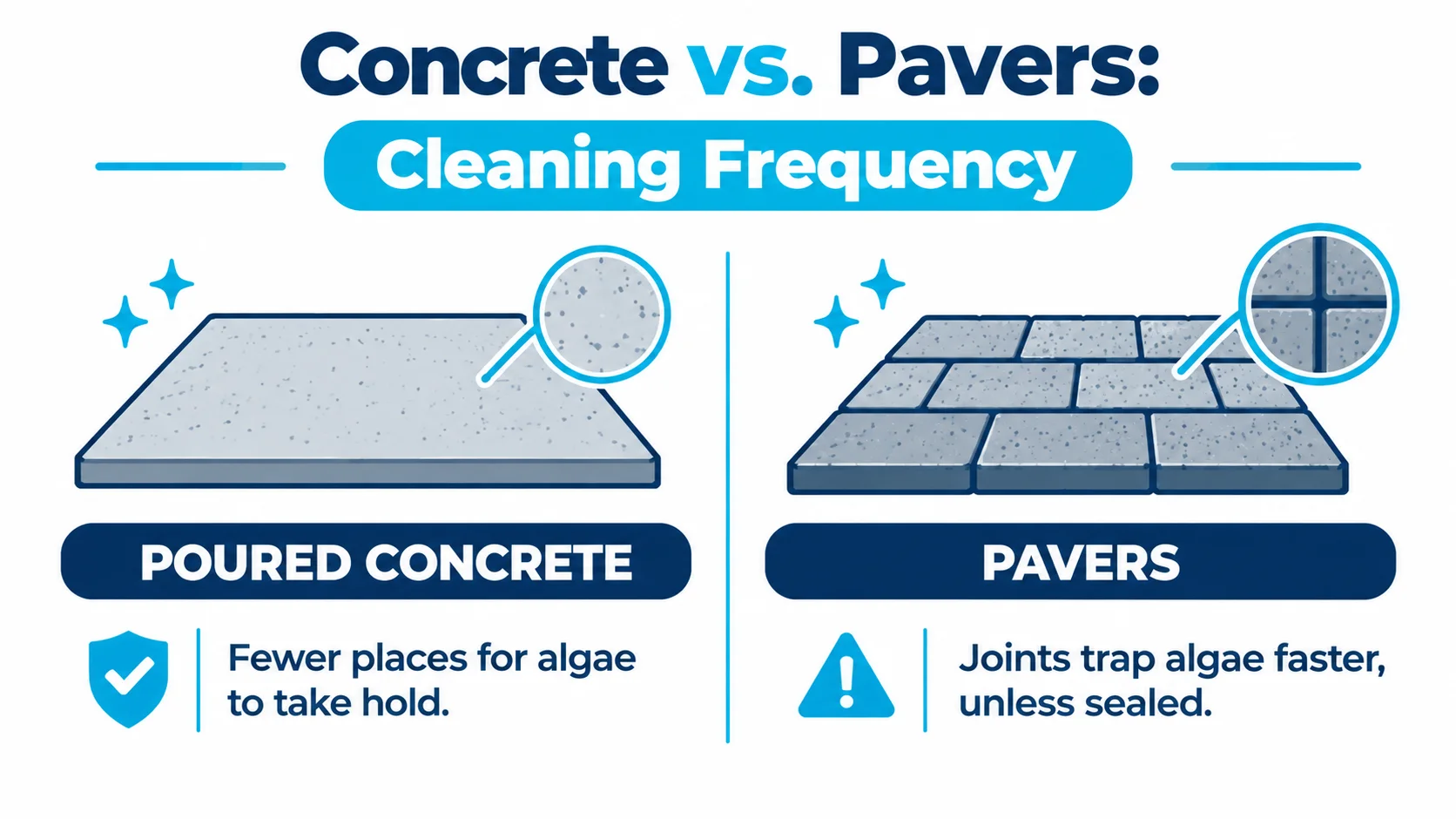
Pavers generally need attention more often than poured concrete, mainly because the joints between individual pavers give algae more places to take hold than a single continuous concrete surface does.
Quick Facts
- Pavers: more surface texture and joints, generally faster algae establishment
- Poured concrete: fewer places for algae to take hold, generally slower buildup
- Shared factor: shade and moisture matter more than the material itself
- Sealing impact: sealed pavers resist staining longer than unsealed ones
- Both need PSI matched to age and condition, not a single default setting
Why do pavers tend to build up algae faster than poured concrete?
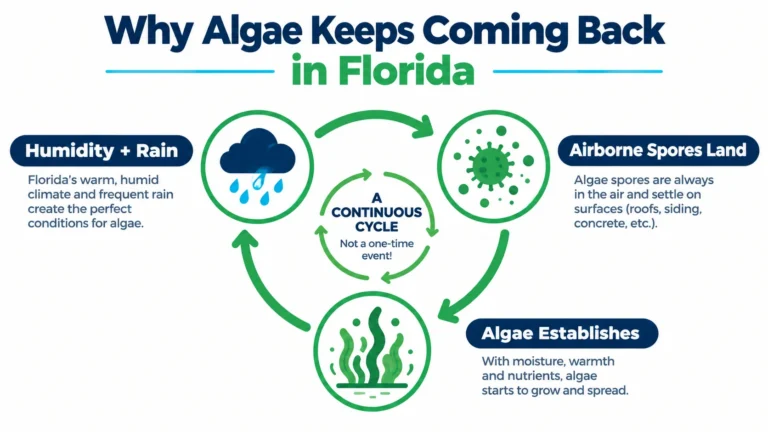
Pavers have joints between each individual piece, and those joints, along with the naturally more textured surface of many paver materials, give algae more places to establish than a single smooth, continuous slab of poured concrete. This doesn’t mean poured concrete doesn’t grow algae, since it clearly does across Brandon, but pavers with the same shade and moisture exposure often show visible staining slightly sooner.
Does sealing change this comparison?
Yes, noticeably. Sealed pavers resist staining and algae growth considerably better than unsealed ones, which can bring their practical cleaning interval closer to or even past that of poured concrete. Poured concrete can be sealed too, though it’s less commonly done for driveways specifically compared to how often pavers get sealed.
Does the pressure washing approach differ between the two?
Pavers need a bit more care around the joints, since aggressive pressure can dislodge joint sand or polymeric sand if it’s used, which is a maintenance consideration poured concrete doesn’t have. Otherwise, both materials follow the same core rule: match pressure to age and condition rather than using one setting for everything, with reduced pressure for anything newer or already showing wear.
Which one is the better choice if I’m planning a new driveway?
That’s a broader decision involving cost, appearance preference, and long-term maintenance commitment that goes beyond cleaning frequency alone, and it’s worth discussing with a paving or concrete contractor rather than a pressure washing company. What we can say from the cleaning side is that pavers generally ask for a bit more frequent attention unless they’re sealed, while poured concrete tends to be a little more forgiving between cleanings.
Frequently Asked Questions
Do pavers cost more to clean than concrete?
Not necessarily more per cleaning, though if pavers need attention more often, the cumulative cost over time can end up higher unless they’re sealed.
Will pressure washing loosen the sand between my pavers?
It can if pressure isn’t adjusted appropriately. We reduce pressure specifically around paver joints to avoid disturbing joint sand unnecessarily.
Should I seal my pavers to reduce how often they need cleaning?
It’s a fair option if you want to stretch out the interval between cleanings, particularly in shaded areas where regrowth tends to happen faster.
Ready to restore your driveway’s curb appeal? Our driveway pressure washing service in Brandon handles concrete and pavers with the right pressure for each surface. Call +1 (656) 253-1990 today for a free quote.