Why Does Algae Come Back So Fast After Cleaning in Florida?
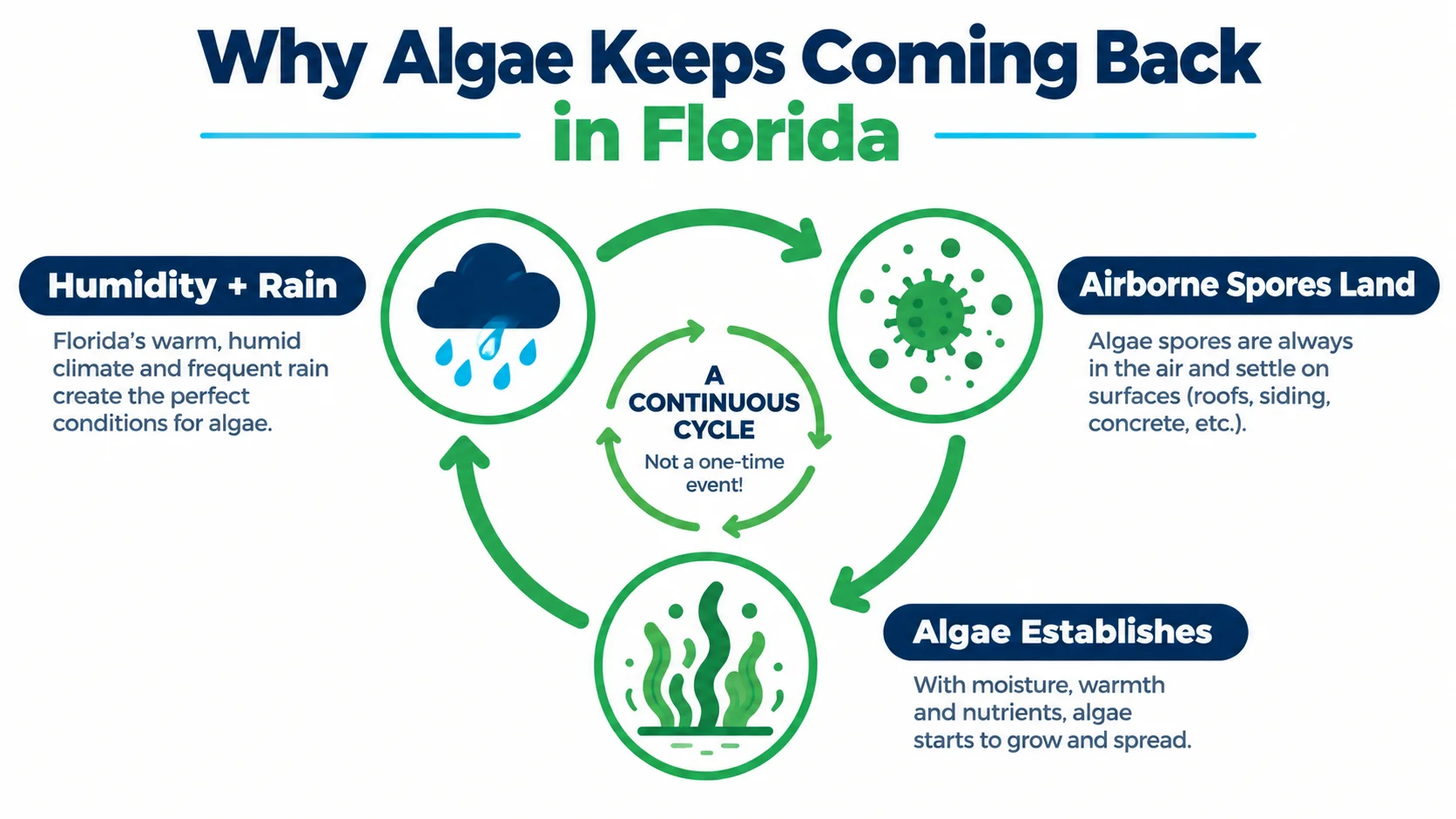
Algae regrowth after cleaning is expected in Florida, not a sign the cleaning didn’t work. The same humidity, warmth, and frequent rain that caused the original buildup are constantly present, so surfaces are exposed to new algae spores continuously rather than just once.
Why doesn’t a cleaning just solve the problem permanently?
Florida’s humidity and rain patterns create constant conditions for algae to establish, and spores are essentially always present in the air across Hillsborough County. A cleaning removes what’s currently there and, when done as a proper soft wash, treats the algae at the root rather than just knocking the surface layer off, but it can’t change the climate that made the growth possible in the first place. Regrowth over time is the expected pattern here, not evidence that something went wrong.
Does the cleaning method actually change how fast regrowth happens?
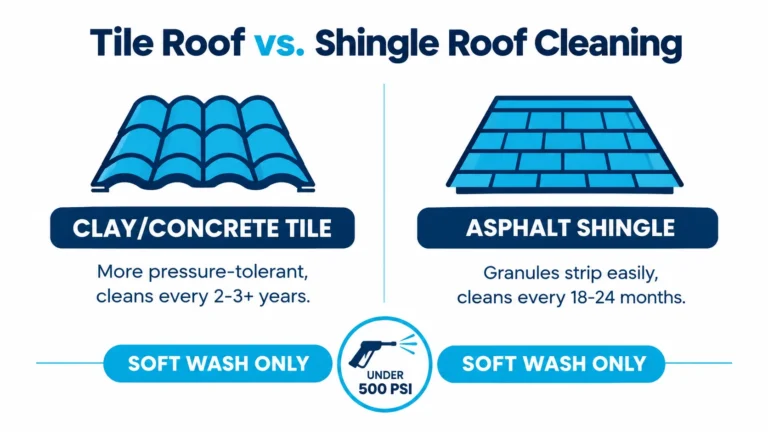
Yes, considerably. Pressure washing alone physically removes visible growth but often leaves algae spores intact below the surface, which is part of why a pressure-washed surface can look clean the day the job finishes and show visible regrowth within months. Soft washing’s chemistry is designed to kill the organism at the source, which generally holds off visible regrowth longer, even though it doesn’t stop it from ever happening again.
Why do some areas of the same property regrow faster than others?
Shade is the biggest factor. A driveway or roof section that stays damp longer after rain, because it’s shaded by trees or the house itself, gives algae more time to re-establish than a section that dries quickly in direct sun. This is why two surfaces cleaned on the same day, on the same property, can show very different regrowth timelines a year later.
Is there anything that actually extends the time between cleanings?
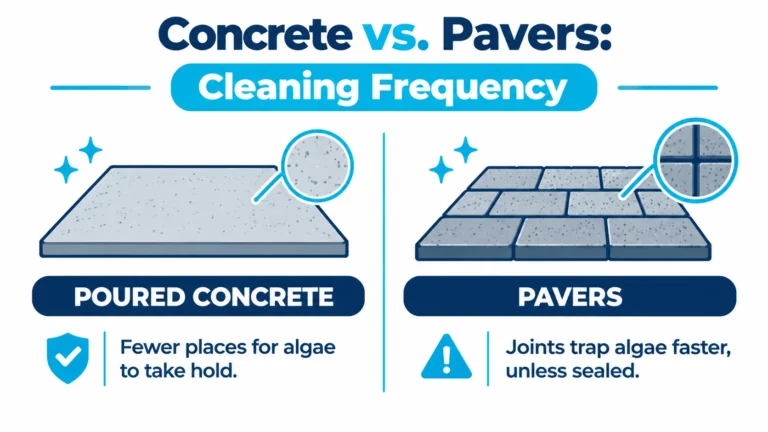
Sealing helps on surfaces where it applies, like pavers, by making it harder for algae to take hold in the first place. Trimming back trees or vegetation that’s keeping a specific area shaded can also help, where that’s a realistic option. Beyond that, the honest answer is that periodic cleaning on a sensible schedule is simply part of maintaining a property in this climate, the same way mowing a lawn is, rather than a one-time fix.
Frequently Asked Questions
Does regrowth mean my cleaning wasn’t done properly?
No. Regrowth over time is expected in Florida’s climate regardless of how thoroughly a surface was cleaned, since the conditions that caused the original growth are ongoing, not one-time.
How much longer does soft washing delay regrowth compared to pressure washing alone?
This varies by surface and shade conditions, but soft washing generally holds off visible regrowth noticeably longer since it treats algae at the root rather than just removing what’s visible.
Is there a treatment that prevents regrowth entirely?
Not entirely, though some post-cleaning protective treatments can extend the interval before regrowth becomes visible again. We can talk through options if that’s something you’re interested in.
Should I be frustrated if algae comes back within a year?
Not necessarily. A year or more before visible regrowth is a fairly normal outcome for many surfaces here, especially with proper soft washing technique. Much shorter than that on a shaded surface is also fairly typical and not unusual.
Ready for a clean that lasts?
Tired of watching algae come back? Call Elite Pressure Washing Brandon at +1-656-253-1990 for a free quote — we’ll recommend the right soft wash treatment to keep your roof, driveway, and siding looking their best.