Post-Hurricane Exterior Cleaning Checklist for Brandon, FL Homeowners
A hurricane moving through Hillsborough County leaves more behind than downed branches and debris. After a hurricane or major storm, Brandon homes typically need exterior cleaning for salt residue, storm debris, and mud or silt buildup in addition to normal algae growth, usually within two to four weeks of the storm passing once it’s safe to assess the property. Treating this as routine maintenance instead of a priority is one of the more common mistakes homeowners make after a storm.
- Common post-storm residue: Salt spray, mud, plant debris, silt runoff stains
- Safe to begin cleaning: Once a structural damage assessment is complete
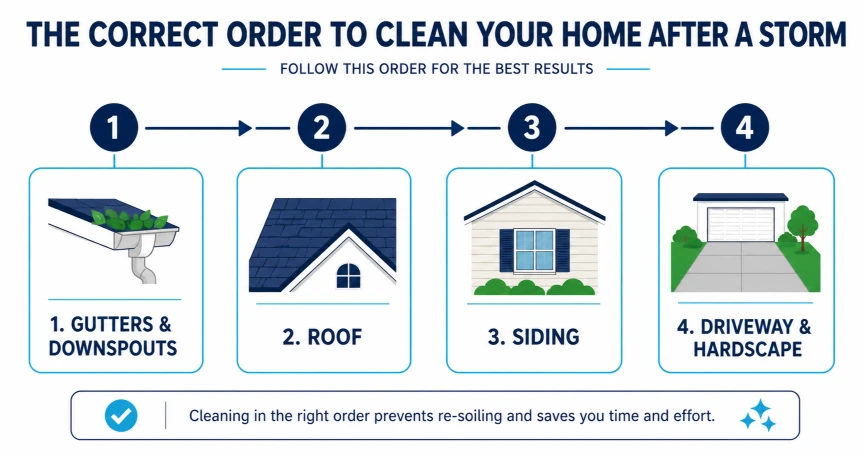
- Cleaning priority order: Gutters and downspouts first, then roof, then siding, then hardscape
- Before cleaning anything: Photograph visible damage for insurance purposes
- Recommended timeframe: Within 2 to 4 weeks after the storm
Safety and Insurance Come First
Before any cleaning starts, the property needs a basic damage check, ideally by a roofer or contractor if there’s any visible structural concern. If you plan to file an insurance claim for storm damage, photograph everything first. Cleaning debris or staining before documentation exists can complicate a claim, since adjusters rely on being able to see the property in its post-storm condition.
What Storms Actually Leave Behind
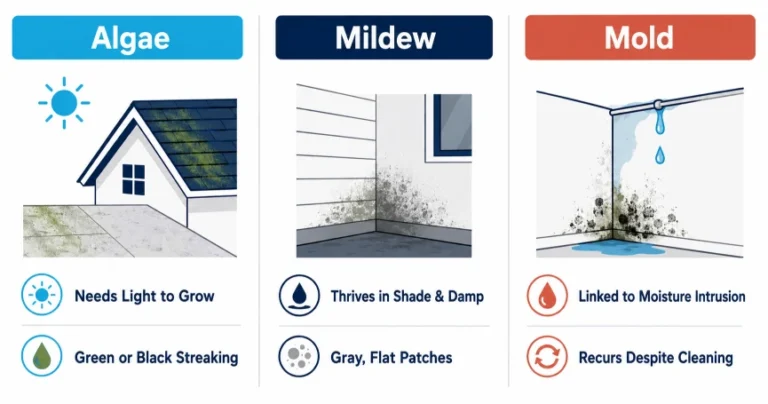
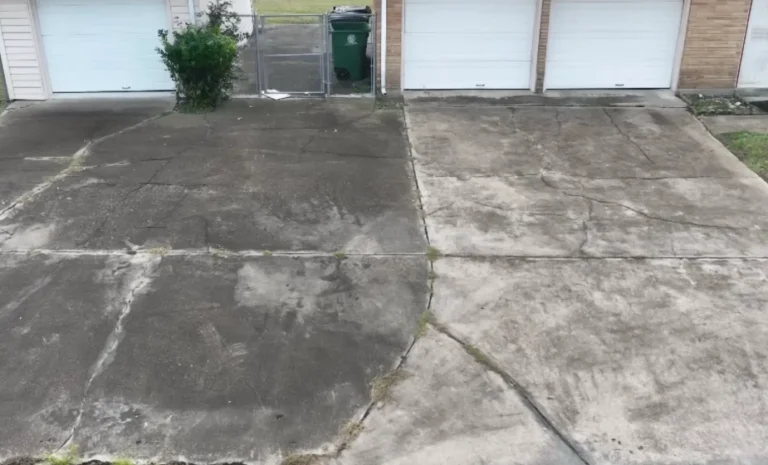
Beyond the obvious leaves and branches, storms moving through this area typically leave salt residue carried in on coastal winds, silt and mud stains where runoff crossed driveways and walkways, and organic debris packed into gutters and roof valleys. That debris holds moisture against the roof and siding long after the storm has passed, which accelerates algae and mildew growth beyond what normal seasonal buildup would cause.
The Right Order to Clean In
Gutters and downspouts should come first, since clogged gutters can cause water to back up under roofing material during the next rain. The roof comes next, followed by siding and stucco, and hardscape surfaces like driveways and pool decks last, since runoff from the higher surfaces often ends up on the ground anyway.
Why This Isn’t Optional Maintenance This Time
Routine seasonal cleaning can wait a few extra weeks without much consequence. Post-storm debris sitting in gutters or roof valleys is different, since trapped organic material and moisture actively cause damage the longer they’re left in place, beyond just the appearance issue. Treating this cleaning as time-sensitive rather than routine protects the property more than a standard maintenance schedule would.
What to Watch For While Cleaning
Storm cleanup is also a good time to notice things a routine cleaning might not surface, like loose shingles, damaged fascia, or fence sections that shifted in high wind. If anything looks structurally off during the process, it’s worth flagging separately from the cleaning itself.
Frequently Asked Questions
Should I clean before or after filing an insurance claim?
Document everything with photos before cleaning starts. Once damage is recorded, cleaning debris and staining doesn’t typically interfere with a claim already in progress.
Can storm debris actually damage my roof if I leave it too long?
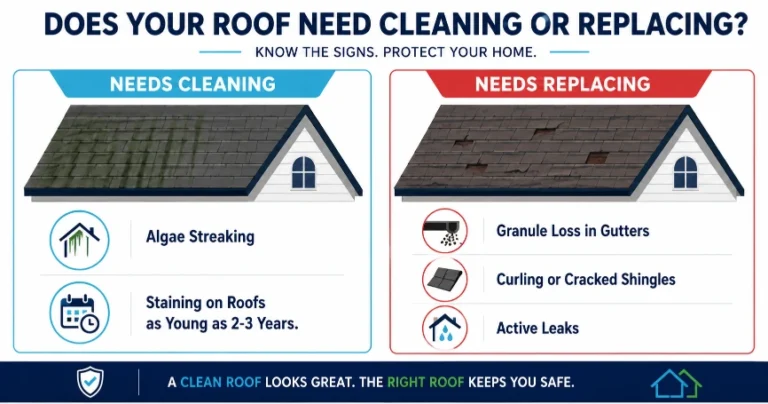
Yes. Debris trapped in valleys and gutters holds moisture against roofing material, which can accelerate granule loss and create conditions for leaks over time, beyond the algae growth it also encourages.
Is post-storm cleaning more expensive than routine cleaning?
It depends on how much debris and residue has accumulated, but the process itself uses the same methods as routine cleaning. Heavier debris buildup can mean more time on site, which is reflected in the quote.
If your property took on storm debris or salt residue, call us and we’ll help you prioritize what needs attention first. See our full range of services and pricing for what’s typically involved.