What Is Gloeocapsa Magma? The Algae Behind Your Roof’s Black Streaks
If your roof has black streaks running down from the ridge, you’ve probably heard someone call it dirt, mold, or just “getting old.” None of that is quite right. What’s actually growing on your shingles has a name, a specific reason it shows up the way it does, and a reason plain rain never seems to touch it.
What Exactly Is Gloeocapsa Magma?
Gloeocapsa Magma is a species of cyanobacteria, commonly known as blue-green algae, that causes the black streaking seen on asphalt shingle roofs across Florida and the Southeast. It feeds on calcium carbonate, the limestone-based filler used in asphalt shingle manufacturing, which explains why it targets that material specifically.
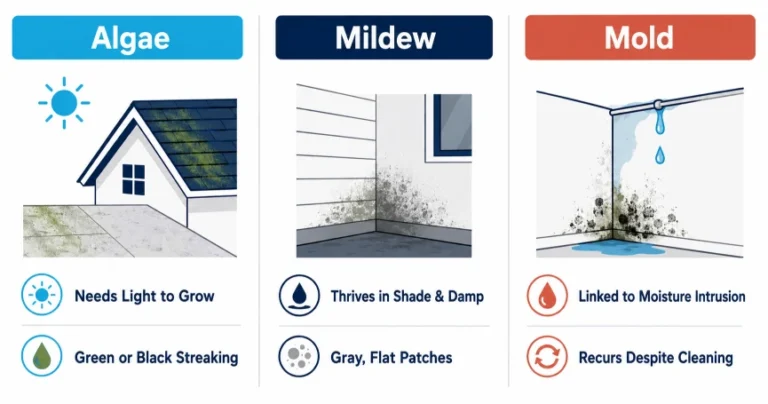
It’s often mistaken for mold or ordinary dirt, but it’s neither. Within the Cyanobacteria phylum, Gloeocapsa Magma belongs to a group of organisms sometimes called blue-green algae, even though they’re technically bacteria capable of photosynthesis. That distinction is why it behaves differently from dirt or mildew, and why it shows up almost exclusively on asphalt shingles rather than metal or tile roofing.
It thrives in warm, humid conditions, which makes Hillsborough County close to ideal for it. Long rainy seasons, high year-round humidity, and mature tree cover across older Brandon neighborhoods all add up to exactly the environment this organism needs to establish itself and spread.
- Organism type: Cyanobacteria (blue-green algae), species Gloeocapsa Magma
- What it feeds on: Calcium carbonate (limestone filler) in asphalt shingles
- Where it spreads fastest: Shaded, north-facing, and humid roof sections
- Removes with rain: No, it anchors into the shingle surface
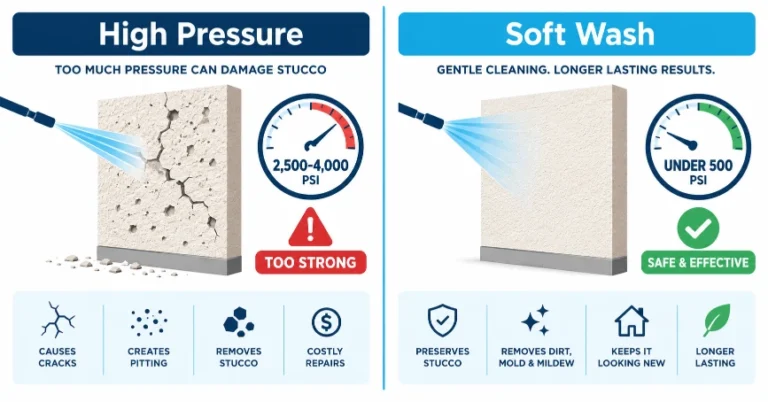
- Safe removal method: Soft washing under 500 PSI with an algaecide treatment
- Typical re-treatment interval in Brandon, FL: Every 4 to 5 years for maintained roofs
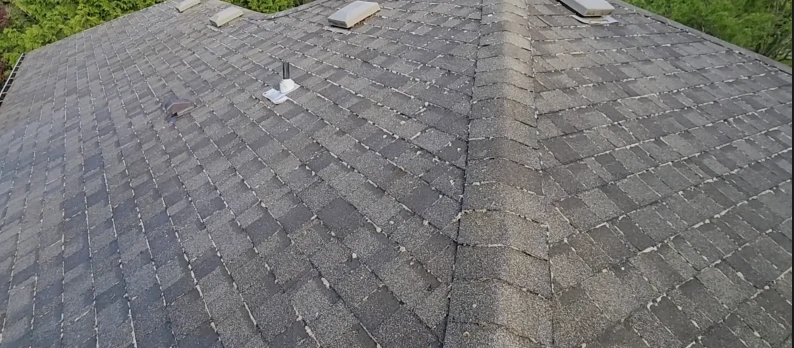
Why It Spreads in Streaks Instead of Evenly
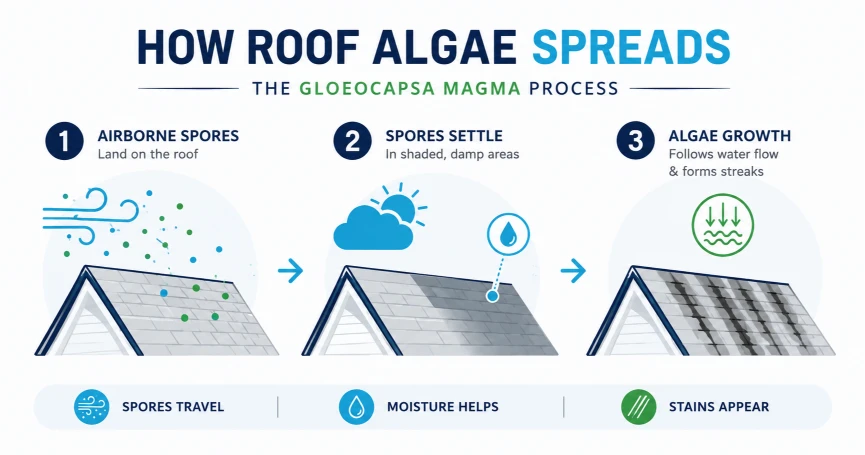
The algae spreads through airborne spores, carried by wind, birds, and sometimes just rain runoff moving from one roof to a neighboring one. Once spores land on a shingle, growth isn’t uniform across the whole roof. It concentrates in the areas that stay wet longest: north-facing slopes, sections shaded by trees, and the paths water naturally follows as it runs down toward the gutters. That’s why the staining shows up as streaks rather than an even haze. It’s tracing the exact path water takes off your roof.
Why It Won’t Wash Away With Rain
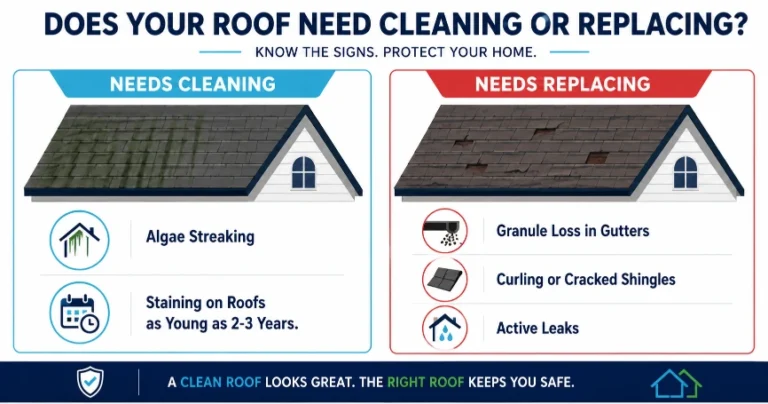
This is the part that surprises most homeowners. Dirt rinses off with enough water. Algae doesn’t, because it isn’t sitting on top of the shingle the way dirt does. It’s a living organism that anchors itself into the texture of the surface, and it produces a protective outer coating as it grows. A garden hose, or even a heavy Florida downpour, simply doesn’t disturb it. The streaking will keep spreading on its own timeline regardless of how much it rains, until the algae itself is actually treated.
The Real Cost of Leaving It Alone
Beyond the obvious curb appeal issue, untreated algae growth can gradually degrade the granules on asphalt shingles, which shortens the effective life of the roof. There’s also a more immediate concern for a lot of Brandon homeowners: several Florida insurers have started flagging visibly stained roofs during policy renewal inspections, and some active HOAs in neighborhoods like Bloomingdale and Kings Point send violation notices specifically for algae staining. If you’ve already gotten one of those letters, the staining is the cause, not a coincidence.
A Few Common Myths Worth Clearing Up
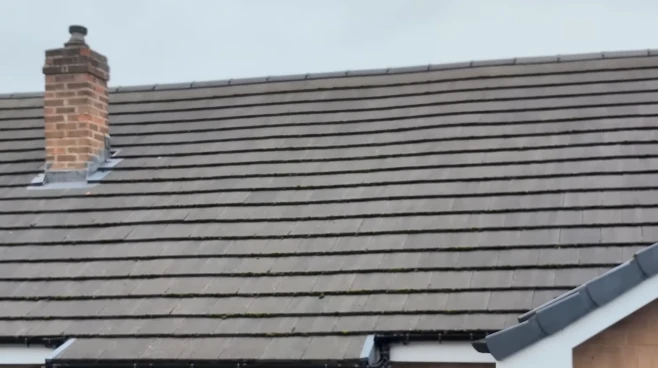
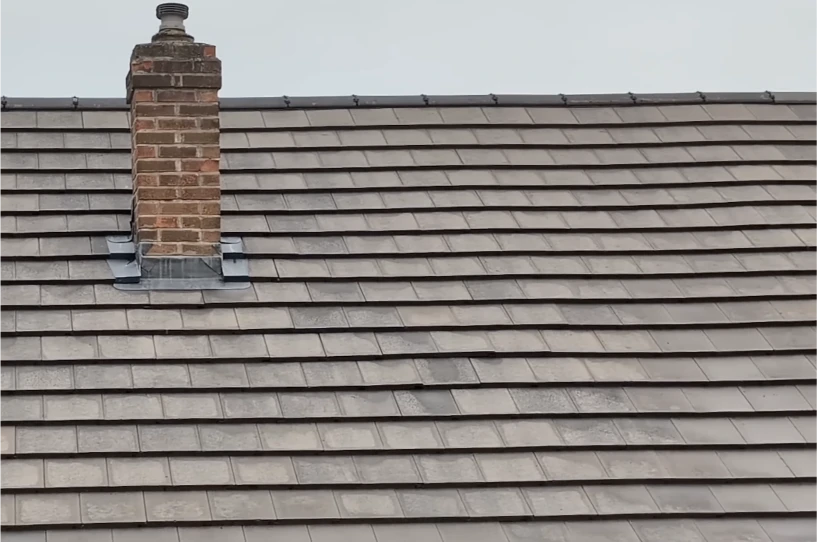
“Pressure washing will get rid of it fast.” High-pressure washing can actually strip the protective granules off asphalt shingles or crack tile, which does real damage while barely touching the algae itself. This is the single most common mistake homeowners make when trying to handle it themselves.
“It’s just dirt, a good scrub will handle it.” As covered above, scrubbing the surface doesn’t reach the organism itself since it’s embedded into the shingle texture, not sitting on top of it.
“Once it’s cleaned, it’s gone for good.” A proper soft wash kills the algae down to the root, but spores are constantly airborne in this climate. Most roofs in the Brandon area only need a full soft wash every four to five years if maintained, though homes with heavy shade may need attention sooner.
What Actually Works
The only method that reliably removes Gloeocapsa Magma without damaging the roof is soft washing: low pressure, under 500 PSI, combined with a cleaning solution that kills the algae at the source and is given time to work before rinsing. It’s the same approach we use on every roof cleaning job across Brandon, precisely because it’s the one method that solves the actual problem instead of just moving it around.
Frequently Asked Questions
Is Gloeocapsa Magma dangerous to my health?
It’s not considered a health hazard the way toxic mold can be. The main risks are to the roof itself, not to people inside the home.
Can I remove Gloeocapsa Magma myself?
DIY treatments exist, but bleach-based store products often only lighten the surface temporarily and can damage landscaping and metal fixtures if not rinsed carefully. Professional soft washing treats the algae at the root rather than just bleaching the visible stain.
Does Gloeocapsa Magma only affect old roofs?
No. Spores can land on a roof of any age. Newer roofs simply haven’t accumulated enough growth yet to show visible streaking, which usually takes a couple of years to become noticeable.
Will it come back after soft washing?
Eventually, yes, since spores are constantly present in Florida’s climate. That’s why most maintained roofs in the Brandon area only need re-treatment every four to five years rather than a one-time fix.
If your roof is showing early streaking, or you’ve already gotten a letter about it, call us and describe what you’re seeing. We’ll tell you honestly what it needs.