How to Tell If Your Roof Needs Cleaning or Replacing
Black streaking on a roof makes it look older than it is, and that visual alone convinces a lot of homeowners they’re looking at a replacement job. In most cases, algae staining alone does not mean a roof needs replacing. Cleaning and replacement solve two different problems, and the actual answer comes down to a handful of specific, checkable signs, not how dark the streaks look from the driveway.
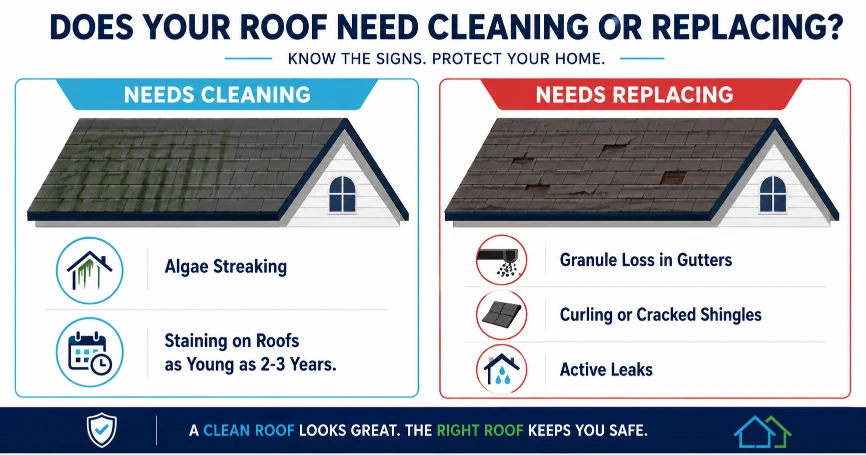
- Algae staining alone: Cleanable, not a replacement sign
- Granule loss in gutters or downspouts: A genuine replacement indicator
- Active leaks or interior water stains: Needs a roofing inspection, not cleaning
- Curling, cracked, or missing shingles: Replacement territory
- Typical asphalt shingle lifespan: 15 to 25 years
- How young a roof can show algae streaking: As early as 2 to 3 years old
Why Algae Alone Isn’t a Replacement Trigger
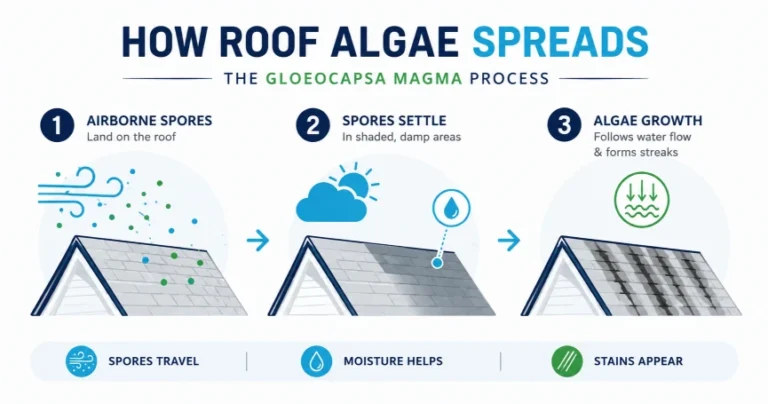
Algae staining is a surface issue. It affects appearance and, left untreated long enough, can contribute to granule loss over time, but the streaking itself doesn’t indicate the shingles have failed structurally. A three-year-old roof can show heavy black streaking in a shaded, humid yard while a fifteen-year-old roof in full sun stays relatively clean. Age of the staining and age of the roof aren’t the same measurement.
What Actually Points to Replacement
A few signs are worth checking before assuming a roof is done. Granules collecting in gutters or on the ground near downspouts mean the shingles are shedding their protective coating, which is a genuine sign of wear rather than surface algae. Shingles that are curling at the edges, cracked, or visibly missing sections point the same direction. Active leaks, or water stains appearing on ceilings or interior walls, mean the roof has already failed in at least one spot and needs a professional inspection right away, not a cleaning appointment.
What Cleaning Can and Can’t Fix
A proper soft wash roof cleaning removes algae staining and restores the roof’s appearance without stripping granules or cracking tile, since it relies on a low-pressure treatment rather than force. What it can’t do is repair structural damage, replace missing granules that have already washed away, or fix an active leak. Cleaning addresses what’s on the surface, not what’s happening underneath it.
Why This Matters for HOA and Insurance Situations
Both HOA violation letters and insurance renewal flags are usually triggered by visible staining, not an actual assessment of the roof’s structural condition. That means a roof getting flagged for appearance often just needs a proper cleaning to resolve the issue, not a conversation about replacement, even though the letter itself can make it feel more serious than it is.
What to Do If You’re Not Sure
If the roof is showing staining but no leaks, no granule loss, and no visible shingle damage, cleaning is almost always the right first step, and it’s far less expensive than jumping straight to a replacement conversation. If you’re seeing any of the structural warning signs above, that’s worth a roofing contractor’s inspection before anything else.
Frequently Asked Questions
Can a roof cleaning make an old roof look brand new?
It can dramatically improve appearance by removing staining, but it won’t hide genuine wear like curling shingles or granule loss. Cleaning restores color and removes algae, it doesn’t reverse aging.
Will a pressure washing company tell me honestly if I need a roofer instead?
A reputable one will. If we see signs during a job that point to something beyond cleaning, like granule loss or damaged shingles, we’ll tell you directly rather than cleaning over a problem that needs a roofer’s attention.
Does algae staining lower my home’s resale value?
It can affect curb appeal and first impressions during a sale, since buyers often assume staining means an older or neglected roof even when that’s not the case. Cleaning before listing is a common, low-cost way to avoid that assumption.
If you’re not sure which side of this your roof falls on, send us a photo or describe what you’re seeing and we’ll give you an honest read before you spend money on the wrong fix.