New Concrete Driveway? Here’s How Long to Wait Before Pressure Washing
Getting a new driveway poured is the kind of project where the last thing anyone wants is to damage it right after it’s finished. Freshly poured concrete should not be pressure washed for at least 12 months, and even after that, it needs reduced pressure for a period beyond initial curing. The reasoning comes down to how concrete actually hardens, not just how long it sits.
- Minimum wait before any pressure washing: 12 months
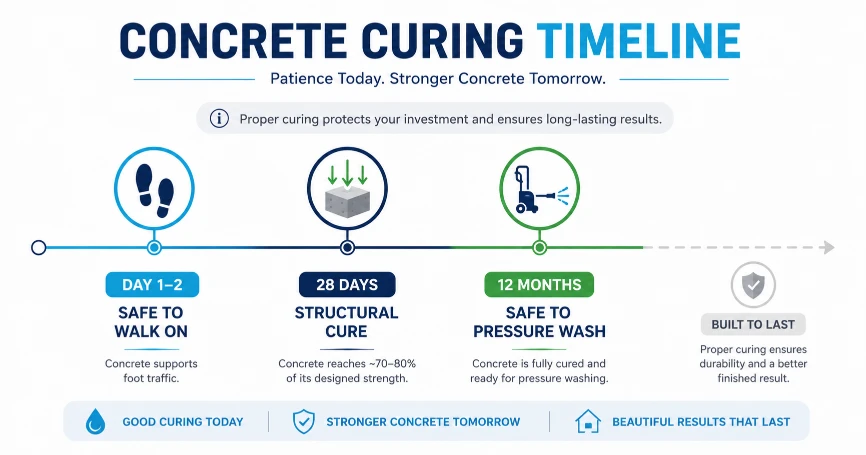
- Initial structural cure time: Around 28 days
- Vulnerable surface layer: The “cream coat,” the top finish layer
- Risk of early cleaning: Scalping the cream coat, exposing aggregate underneath
- Safe interim cleaning: Light rinsing with a garden hose
- PSI once cleaning begins: Reduced pressure, well under standard 3,500 PSI
Curing and Hardening Are Not the Same Thing
Concrete reaches roughly 70 percent of its final strength within the first 28 days, which is why that number gets mentioned so often. But reaching structural strength isn’t the same as the surface being fully hardened and ready for pressure. The very top layer, sometimes called the cream coat, continues to harden gradually well beyond that initial 28-day window, and it’s this thin surface layer that pressure washing can damage if cleaning starts too early.
Florida’s humidity actually extends this timeline slightly compared to drier climates, since consistently high moisture in the air slows the final surface hardening process even after the concrete has technically cured underneath.
What Happens If You Clean Too Early
Pressure washing new concrete before the cream coat has fully hardened can scalp that layer off entirely, exposing the aggregate underneath. Once that happens, it’s permanent. The surface will look rougher and more porous than intended, age faster than the rest of the driveway, and the exposed aggregate becomes an easier target for future staining since it holds onto dirt and algae more readily than an intact cream coat.
What’s Actually Safe in the Meantime
A garden hose rinse is fine at any point after the concrete has set enough to walk on, generally within a day or two of the pour. That level of water pressure isn’t enough to affect the curing surface. What to avoid during that first year is anything beyond a plain water rinse: no pressure washing, and no aggressive scrubbing with stiff brushes or abrasive cleaners.
After the First Year
Once a full year has passed, the driveway can be treated like any other residential concrete surface, cleaned at or below the standard 3,500 PSI safe threshold. Some contractors still recommend a slightly reduced pressure for another few months beyond that as an added precaution, particularly if the driveway sits in a shaded area where the surface stayed damp longer during curing.
This timing matters most for homeowners in newer developments where fresh concrete is common. If your driveway was recently poured, mentioning that when you call for a quote lets us adjust the approach specifically to protect it.
Frequently Asked Questions
Can I seal new concrete before the year is up?
Sealing typically has its own separate waiting period, often around 30 days, shorter than the cleaning timeline. Check with whoever poured the concrete for a specific recommendation tied to the exact mix used.
What if my new driveway already has stains before the year is up?
Light rinsing with a hose is still the safest option during this period. If staining is significant, it’s worth a quick call to discuss options rather than attempting a stronger cleaning method too early.
Does this waiting period apply to pavers too?
Pavers cure differently since they’re pre-cast before installation, so the extended waiting period is specific to poured concrete rather than paver driveways or patios.
If you’re planning ahead for a new driveway or just had one poured, we’re happy to talk through timing before anything gets scheduled. See our driveway and concrete cleaning page for more on how we match pressure to a surface’s age and condition.