Why Does My Pool Deck Get Slippery Even After I Hose It Off?
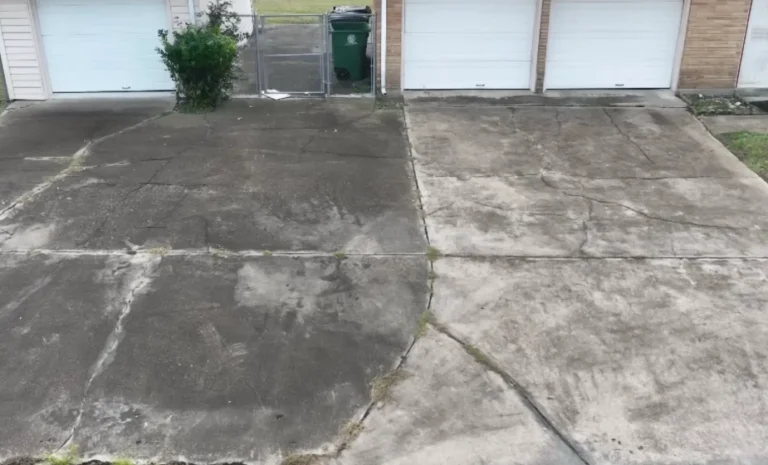
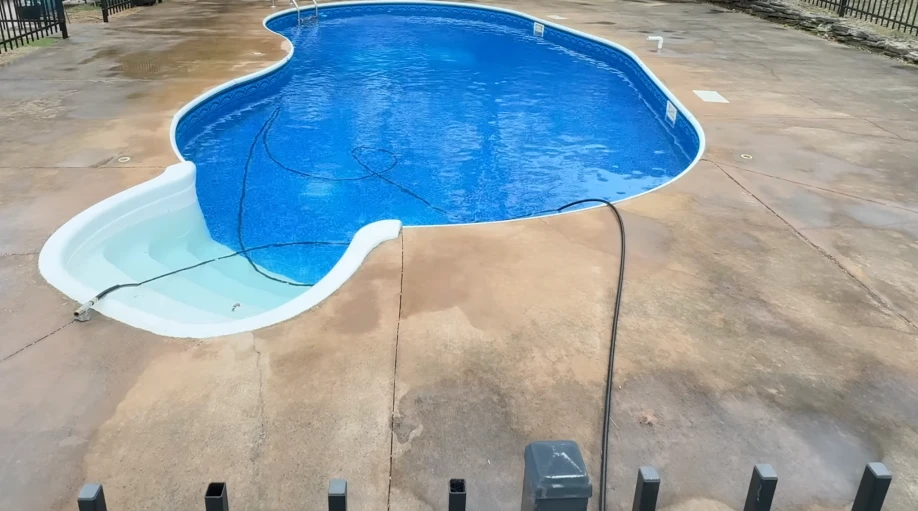
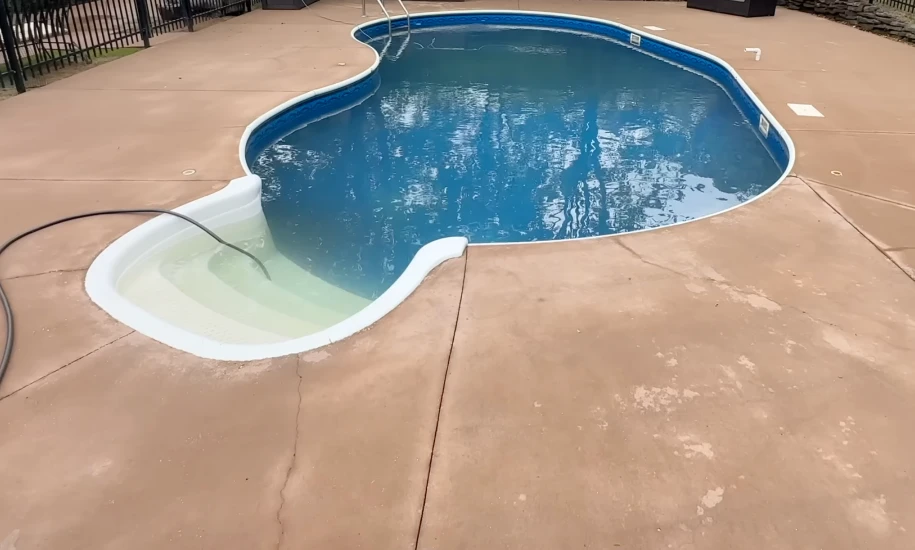
You hose it off, it looks clean, and it’s still slick enough to worry about the next time someone walks out of the pool barefoot. Pool decks stay slippery after hosing because the algae causing the problem grows into the texture of the concrete or pavers, not on top of it, so surface-level rinsing never actually removes what’s making it dangerous. It’s the same underlying issue as roof and driveway algae, just showing up somewhere the consequences are more immediate.
- Cause of slipperiness: Algae embedded in surface texture, not surface dirt
- Why hosing fails: Water pressure from a hose can’t disturb embedded growth
- What actually works: Pressure washing matched to the surface material
- Prevention option: Sealing pavers and concrete after cleaning
- Recommended cleaning frequency: 1 to 2 times per year, more often in heavy shade
- Safety concern: Wet, algae-covered surfaces significantly increase slip risk near pools
Why This Isn’t Just a Cosmetic Issue
A pool deck combines two conditions that make algae growth almost unavoidable in Florida: constant moisture from pool splash-out and hose use, and frequent shade from surrounding structures, screens, or landscaping. Algae doesn’t need much of either condition to establish itself, and a pool deck usually offers both in steady supply.
The safety angle is what separates this from a driveway staining issue. Wet feet combined with an algae-slick surface right next to a pool is a genuine fall risk, not just an appearance problem, which is why this particular kind of staining deserves faster attention than most other exterior surfaces.
Why a Hose Never Solves It
A garden hose produces somewhere around 40 to 60 PSI. That’s enough to move loose dirt or debris off a flat surface, but nowhere near enough force to disturb algae that has grown into the microscopic texture and pores of concrete or paver material. The organism isn’t sitting on the surface waiting to be rinsed away. It’s anchored into it, which is exactly why the deck can look freshly hosed and still feel slick underfoot within minutes.
What Pressure Washing Actually Does Differently
Pressure washing generates enough force, in the range of 2,500 to 4,000 PSI depending on the surface, to physically break up and remove the embedded growth rather than just moving surface debris around. For pool decks specifically, pressure gets adjusted based on whether the surface is poured concrete, natural stone, or pavers with joint sand that shouldn’t be blasted out in the process.
Sealing as a Longer-Term Fix
Sealing isn’t required, but it changes the equation meaningfully. A sealed surface is far more resistant to algae taking hold in the first place, which means longer stretches between cleanings and less slip risk building up in between. It’s particularly worth considering for pool decks in heavily shaded backyards, where regrowth after cleaning tends to happen fastest.
How Often This Actually Needs Attention
Most pool decks in the Brandon area benefit from cleaning once or twice a year. Heavily shaded backyards, or decks near screened enclosures that limit direct sunlight and airflow, often need the more frequent end of that range to stay ahead of regrowth. See our full pool deck and paver cleaning service for surface-specific pricing.
Frequently Asked Questions
Is a slippery pool deck always algae?
In most cases in this climate, yes. Mineral deposits from pool water can occasionally contribute, but persistent slipperiness that returns quickly after hosing is almost always algae growth.
Will pressure washing damage pool deck pavers?
Not when pressure is matched correctly to the material. Pavers need adjusted pressure to avoid disturbing the joint sand between them, which is a routine part of cleaning them properly rather than a reason to avoid pressure washing altogether.
Can I use chlorine to kill the algae on my pool deck?
Chlorine-based products can lighten staining temporarily, but they don’t remove the physical buildup causing the slip hazard, which is a texture issue as much as a biological one. Physical cleaning is still required to fully resolve it.
If your pool deck feels slick no matter how often you rinse it, that’s the algae talking, not something a hose was ever going to fix. Call us and we’ll walk you through what your specific surface needs.