Is That Flaking on Your Driveway Damage, or Just Aging Concrete?
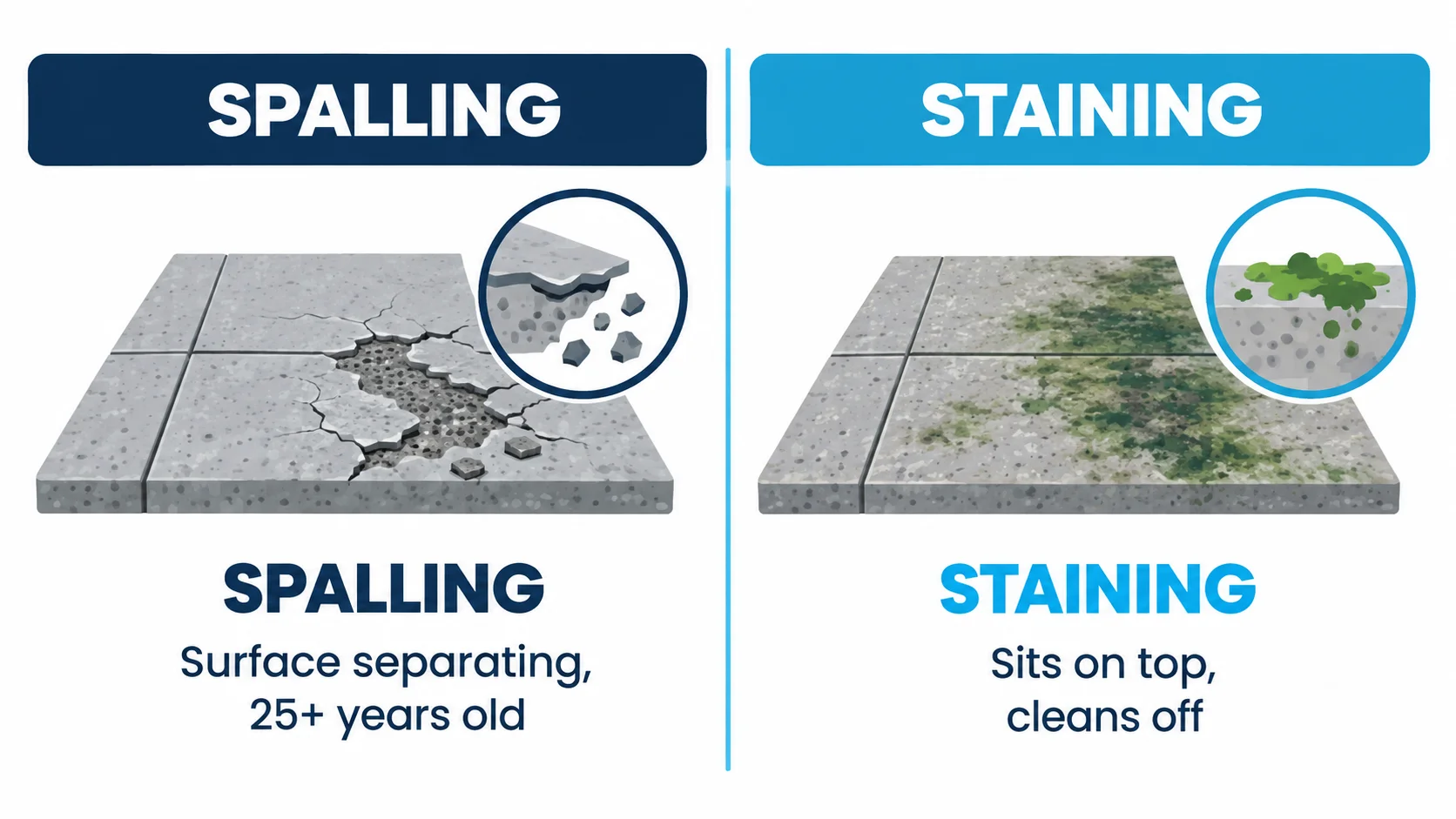
If your driveway is showing small chips or flaky patches rather than deep cracks, you’re most likely looking at spalling: the top layer of concrete separating and flaking away, not damage from a previous cleaning or ordinary dirt buildup. This is common on Brandon driveways poured in the 1980s and 1990s, and it changes how the surface should be cleaned going forward.
Quick Facts
- What it looks like: small flakes or chips lifting off the surface, not deep structural cracks
- Typical age: most common in concrete 25+ years old
- Root cause: moisture trapped beneath the surface expanding and contracting over years
- Risk factor: high pressure on spalled concrete accelerates the flaking, it doesn’t cause it
- What cleaning can and can’t do: proper technique stabilizes the surface, it does not repair spalling
What actually causes concrete to spall?
Spalling happens when moisture works its way into the concrete and cycles between wet and dry conditions enough times that the top layer separates from what’s underneath. Florida doesn’t get the hard freezes that cause spalling further north, but the constant humidity and heavy rain cycles across Hillsborough County produce a similar effect over enough years. Concrete poured before modern sealing and mix standards became common, which describes a lot of driveways in Brandon’s older established neighborhoods, is more susceptible simply because of its age and the materials available at the time it was poured.
How can I tell spalling apart from a dirty or stained driveway?
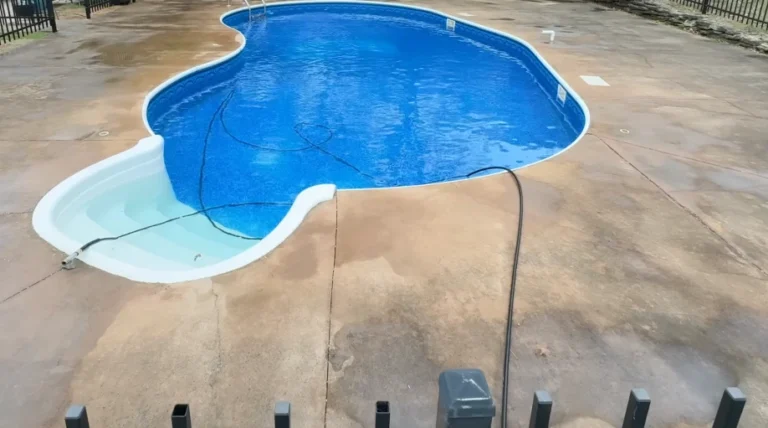
Staining sits on top of the surface and comes off with the right cleaning method. Spalling is the surface itself coming apart. If you run a hand over the area and feel a rough, sandy texture with small loose chips, or the discoloration doesn’t fully clean up no matter what’s tried, that’s usually spalling rather than dirt or algae. Spalling also tends to show up first in specific spots, near control joints, along the edges of the driveway, or wherever water regularly pools, rather than as an even layer across the whole surface the way algae staining typically spreads.
Can pressure washing make spalling worse?
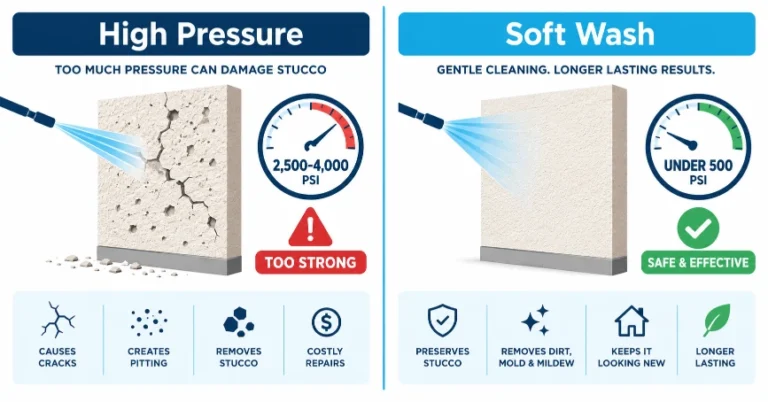
Yes, if the pressure isn’t adjusted for it. High pressure applied directly to an already-spalled area can lift more of the loose surface material and expand the affected patch. This is exactly why we assess a driveway’s condition before starting rather than running one default PSI setting on every job. On a driveway that’s already showing spalling, we drop pressure significantly in those specific areas and rely more on chemical treatment to lift dirt and staining without further disturbing the loose surface.
What’s the right way to clean a spalled driveway?
Reduced pressure combined with the right cleaning solution is the standard approach, enough to remove algae, dirt, and staining without adding force to areas where the surface is already compromised. We treat the spalled sections separately from the rest of the driveway rather than running one pass at a single setting across the whole surface.
Do I need to replace a spalled driveway?
Not necessarily, and not right away in most cases. Spalling is a cosmetic and gradual structural concern rather than an emergency one, and plenty of driveways with visible spalling remain fully functional for years. Cleaning won’t reverse it, but it also won’t need to if the goal is simply keeping the driveway safe and presentable. If spalling is extensive or the surface feels unstable underfoot, that’s a conversation worth having with a concrete contractor rather than a cleaning company, and we’ll say so if that’s what we’re seeing.
Frequently Asked Questions
Is spalling covered by my homeowners insurance?
Typically not, since it’s classified as gradual wear rather than sudden damage, though this varies by policy and carrier. Check your specific policy language rather than assume either way.
Will sealing stop spalling from getting worse?
Sealing can help slow moisture intrusion going forward, but it won’t reverse spalling that’s already present. It’s most effective as a preventive step on concrete that hasn’t started spalling yet.
Can pressure washing fix spalling?
No. Cleaning can remove dirt and staining and stop the surface from getting worse from cleaning technique specifically, but it doesn’t repair or reverse the underlying deterioration.
How do I know if my driveway is a candidate for spalling?
Concrete over roughly 25 years old, especially in shaded or frequently damp areas, is the most common candidate. If you’re not sure what you’re looking at, send us a photo and we’ll give you an honest read before we ever turn on the equipment.